|
1. BURLINGTON COUNTY TRIVIA:
Unusual Persons, Places and Events in Burlington County History
Call it “Weird Burlington County” or “Fun Facts about Burlington County,” County Historian Joe Laufer has uncovered all kinds of information about local people, places and things in his years of research on various historical topics. “Many of the things I’ve discovered didn’t exactly fit into the topic I was researching, so I kept inserting them into a miscellaneous file over the years. I have now accumulated over fifty unrelated curiosities and when looking for a new lecture topic the idea popped into my mind that a potpourri of trivia might be fun.”
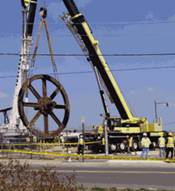
You might wonder what Old Gold Cigarettes, Hitler’s Yacht, a bloody Hessian soldier’s handprint and Baseball rubbing mud have to do with Burlington County. Well, Joe has a story about each of these categories, and 55 others. He will point out where you can find a 124 ton factory flywheel, a 15-foot “Mighty Joe Young” look-alike, a Revolutionary War cannonball stuck in a wall, a classic temperance fountain and 8 historical stone mile markers strategically located throughout Burlington County. Remember Burma Shave signs? – we have the only one’s in New Jersey! And did you know that Burlington County became a hideout for certain vulnerable public servants in Philadelphia during the Revolutionary and Civil wars and that others were run out of town for their controversial views on these wars?
These are only some of the 59 items included in this lecture, which Joe calls his venture into “History lite” – and all backed up with illustrations and many “now and then” pictures. According to Joe, “every day we drive by buildings or objects that we don’t even notice, or others we wonder about – like how old are they or what were they used for, or why is that there?” Attendance at this lecture will provide some of the answers. Joe includes a few interesting stories under the topic of “Crime and Punishment” and uncovers some remnants of the old Burlington County Trolley system. The presentation includes the story involving Martin Luther King and an incident in Maple Shade that may have set the entire Civil Rights movement in motion. Joe already has started a file for the sequel!
2. THE RANCOCAS CREEK: WATERWAY TO BURLINGTON COUNTY HISTORY
The Rancocas is a river of many names: to the Indians, the Ancocas; to the colonists, the Northampton River; to us, the Rancocas. This illustrated lecture relates the history of the towns which grew up along the Rancocas and its 3 branches: The Main stem: 8 miles from Rancocas State Park to the Delaware River; The North branch: 31 miles from Lebanon State Forest to Rancocas State Park; The South branch, which includes both the south east and south western spurs. 14 municipalities out of the 40 in Burlington County are touched directly by the waters of the Rancocas. Joe presents historical vignettes about each of the communities from their early days and on through their halcyon days as commercial centers. The lecture explores the ecological, recreational and commercial uses of the Rancocas throughout the years since 1677 when the first Quaker settlers arrived in Burlington. Emphasis is on cultural history in this lecture.
3. NAVIGATING BURLINGTON COUNTY: STEAMBOATING ON THE DELAWARE AND ITS TRIBUTARIES.
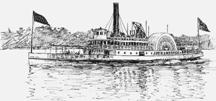
The Golden Age of Steamboats in Burlington County spanned ten decades, from 1820 to 1920. During that time, dozens of steamboats navigated the Delaware River from Philadelphia to Bordentown, with stops at numerous locations in Burlington County along the Delaware River. Some of the boats even ventured into the Rancocas waterway. This illustrated lecture will present historic pictures of the steamboat era in Burlington County from the private collection of Delaware Valley Historian, Paul W. Schopp, from collections of other individuals who submitted pictures for a pictorial history of Burlington County, and from a descendant of George Ridgeway Van Sciver, founder of a Burlington County-based company that built several of the steamboats that plied the Delaware River in this area. The lecture will also identify the location of the wharfs on the Delaware and Rancocas, and provide anecdotal information about this exciting period in our history. In 2007, under the sponsorship of the Burlington County Freeholders, a series of riverboat tours were conducted to acquaint county residents with this long-past era that helped define Burlington County.
4. BURLINGTON COUNTY: CROSSROADS OF THE AMERICAN REVOLUTION
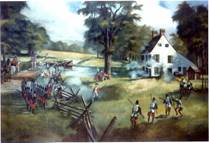
This is an illustrated lecture which focuses on the role played by Burlington County at different times in the evolving history of the Republic. As a natural crossroads between Philadelphia and New York, by water, by rail and by highway, many pivotal events of the Revolutionary war took place in Burlington County. The county became the tactical center of diversionary activity prior to the Battle of Trenton from December 19-25, 1776. The towns of Bordentown, Blackhorse (Columbus), Springfield, Mount Holly and Moorestown were involved as the Hessians were lured from Bordentown and Blackhorse to Springfield (Battle of Petticoat Bridge) and Mt. Holly (Battle of Iron Works Hill) as Washington planned his surprise crossing of the Delaware into Trenton.A year-and-a-half later, as the British abandoned Philadelphia, they traveled through the Burlington County towns of Moorestown, Mt. Laurel, Hainesport (the skirmish at Long Bridge), Mt. Holly, Mansfield and Chesterfield on their way to what would become the Battle of Monmouth on June 28, 1778. Taking over Quaker Meeting Houses in some of these towns, the British plundered their way through Burlington County.There were river bombardments at Beverly, Burlington, Fieldsboro and Bordentown during 1778, and throughout the war Batsto was a key munitions manufacturing center for the militia. The State of New Jersey is celebrating its role as the Crossroads of the American Revolution, and this lecture highlights Burlington County’s link to the crossroads.
5. The New Jersey Pinelands and the Revolutionary War: munitions production, espionage, hideout, and British military target.
Burlington County Historian, Joe Laufer, chronicles the people, places and events associated with the New Jersey Pinelands that played critical and strategic roles in the nation’s war for freedom. Learn about the Privateers and Smugglers at Little Egg Harbor along the Mullica River and the October, 1778 clash at Chestnut Neck; the roles of Count Casimir Pulaski and Benedict Arnold, the Osborn Island Incident; the strategic role of Batsto in supplying munitions and other essentials to George Washington’s Army, and how the “Spy House” on Batsto Lake figures in the war stories. Explore little known Pinelands tales about Tories hiding out and Hessian Soldiers defecting to the protection of Pinelands cover, as well as the role of Pinelands Taverns like Sooy’s (later known as Washington’s Tavern) near Speedwell. Laufer laments that Pinelands war contributions are the most underreported aspects of the Revolutionary War in New Jersey. You will learn how the communities of The Forks and Pleasant Mills proved to be a thorn in the side of the British, and how Taunton Furnace and Retreat (in Medford and Southampton) rivaled Batsto in munitions production. Also, discover George Washington’s connection to Batsto.
Related: Burlington County Tours of Revolutionary War Sites:
Pdf version of tour booklet
Northern loop tour (with photos)
Southern loop tour (with photos)
Revolutionary New Jersey (Crossroads Association website)
Related link: New Jersey: Crossroads of the American Revolution
6. BURLINGTON COUNTY AND ITS RESPONSE TO THE CIVIL WAR
As America commemorates the 150th Anniversary or Sesquicentennial of the Civil War between 2011 and 2015, this lecture focuses on the manner in which the citizens of Burlington County responded to the call to service at the time of the Civil War. Mr. Laufer focuses on Burlington County's own 23rd Volunteers, the Yahoos and their unique role in the war. Major treatment is given to the role of the City of Beverly as a mustering-in city for Southern New Jersey, and its Camp Cadwalader, Military Hospital and Military Cemetery, all important contributions to the Civil War effort. Using the Village of Vincentown as an example of a town's total response to the call to service, using letters, documents and artifacts, Laufer chronicles the journey of several local heros during the war. African American Cemeteries in Burlington County which contain the graves of dozens of Black Civil War Veterans are discussed.
7. QUAKER MEETING HOUSES OF BURLINGTON COUNTY, NEW JERSEY
An illustrated lecture based on a self-guided auto tour created by the author. The lecture covers the 20 past or present Quaker or "Friends" Meeting Houses in Burlington County. Through Mr. Laufer's personal collection of pictures of these best-preserved colonial buildings in the county, you are given an insight into the period and the Quaker influence on the development of Burlington County. Click here for a Self-guided tour of the 21 Quaker Meeting Houses.
8. JOHN WOOLMAN (1720-1772): SON OF BURLINGTON COUNTY, CONSCIENCE OF QUAKERISM AND APOSTLE OF ABOLITION.
An illustrated lecture which relates the life and times of famed Quaker preacher, John Woolman, who was born in the Village of Rancocas and operated his Tailor Shop in Mount Holly. Woolman became a pioneer abolitionist whose travels and writings -- and above all, his example -- inspired his fellow Quakers to give up their family slaves and practice the principles of Quakerism regarding the rights of all men, especially slaves. Mr. Laufer explores Wollman's treatises against slave ownership and his classic Journal, published posthumously.
9. THE STORY OF THE GREAT MOUNT HOLLY FAIR: BURLINGTON COUNTY'S ENTERTAINMENT SHOWCASE - AND ITS SUCCESSOR, THE BURLINGTON COUNTY FARM FAIR.
For 70 years (from 1856 until 1926) the Mount Holly Fairgrounds attracted thousands of visitors, including multiple visits from President Woodrow Wilson, and was considered the premier fairgrounds on the East Coast. It boasted of the only two-tiered grandstand in Eastern United States, and showcased the fastest trotters and pacers in the country. When it closed in 1926, it left a 19-year void in the lives of Burlington Countians. Then, immediately after World War II, the agricultural community launched its successor, the Burlington County Farm Fair, which eventually found a home for 53 years on the Village Green in Lumberton. In 2011 the story comes full circle with the creation of new County-owned Fairgrounds in Springfield Township. County Historian Joe Laufer, provides an illustrated journey from the first fair held on the grounds of the Mt. Holly Court House in 1847, to the purchase of the 24 acre fairgrounds in Mt. Holly in 1856 by the county Agricultural Society, through the post-war revival of the fair and its half-century home in Lumberton, to its new 640 acre residence in Springfield. 165 years of history (from 1847 to 2012) come alive through vintage photos, courtesy of the Mount Holly Historical Society, classic vignettes, and unlikely venues described by Burlington County’s official history story teller.
10. THE BURLINGTON COUNTY LIBRARY SYSTEM: A HISTORY - 1921-2013 - MORE THAN JUST BOOKS
An illustrated lecture describing the precedent-setting history of New Jersey's first county library, which opened its doors in 1921. Inspired by three Burlington County "Helping Teachers" who appealed to the New Jersey State Library to take action on the creation of a state-wide, county-based library system, Burlington County Assemblyman and highly respected fruit grower Emmor Roberts prepared the legislation and moved it through passage by the State Assemblyl. It was signed into law in 1920 by Governor Edwards and the first county library in New Jersey was opened in Burlington County the following year. The first facility opened in a building on Paxon St., Mt. Holly which was owned by the YMCA. Miss Adeline Pratt was appointed first County Librarian. Laufer relates the story of the subsequent 92-year history through 6 innovative library directors who oversaw unprecedented grouth through 4 subsequent locations and two major expansions of the current headquarters on Woodlane Road in Westampton. Using mobile book trucks, which eventually became known as "Bookmobiles" to service "Free Library Stations" in schools, private homes, and other community facilities throughout Burlington County, the County Library System brought books and educational materials to the citizens which eventually evolved into the "book rooms" in the schools and ultimately became the first School Libraries. Likewise the in-home book stations became the dozens of community libraries which are scattered throughout the county as branch libraries and member libraries of the Burlington County Library system. Laufer shows how Burlington County remains in its position as the premier library system in New Jersey with its recent innovations that include an amphitheater, an auditorium and an on-site cafe, along with the most advanced library technology available.
11. NOTABLE WOMEN IN THE HISTORY OF BURLINGTON COUNTY
Six other Burlington County women (Click here) are given passing recognition for their contributions to society in the course of the lecture.
12. HISTORIC BURLINGTON COUNTY ONE-ROOM SCHOOL HOUSES
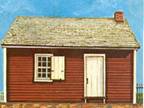
An illustrated lecture about 14 historic schools in Burlington County, most of them restored one-room school houses. When the Quaker colonists set up their communities, the first thing they built was a school. This recognition of the preeminence of education in society has been memorialized in the proliferation of restored one-room school houses throughout Burlington County. Some have been moved from their original location in order to be preserved. They have been outfitted in colonial furniture and antique school supplies in order to memorialize the conditions under which our forebears were educated. This illustrated lecture shows both the interior and exterior of the many restored school houses, preeminent among them, the Brainerd Street School in Mount Holly. Others in Bordentown, Vincentown, Medford, Tabernacle, Maple Shade, Mansfield, Burlington City and Willingboro are highlighted for their history and style. In addition to the restored school houses, some that now have other uses are also pointed out. Click here for illustrated lecture summary
13. THE HISTORIC COMPANY TOWNS OF BURLINGTON COUNTY, NEW JERSEY
An illustrated lecture which describes the 6 unique company towns of Burlington County:
-
Batsto and Atsion , which were created around the Bog Iron industry which flourished for approximately 100 years between the Revolutionary and Civil Wars.
-
Smithville in Eastampton Township which was created first as a company town for the Shreve Cotton Works and was succeeded by the H.B. Smith Woodworking Machine Company after the Civil War.
-
Whitesbog , a community in present-day Pemberton Township which grew up around the Cranberry and Blueberry industry of the J.J. White Company.
-
Roebling, a town created in 1905 by Charles Roebling in order to house workers for the new John Roebling Iron Foundry, established to support the production of wire rope for bridges and other industrial uses as support for Roebling's Trenton factories which were inadequate to keep up with the demand at the time. Roebling Main Gate Museum.
Mr. Laufer will compare Burlington County's company towns with those in other parts of the country generally founded in conjuction with mining, railroading and other similar industries. He will also point out the similarities in planning, services, and overall philosophy for the several Burlington County towns, as well as their differences.
14. THE PINELANDS PANORAMA - BURLINGTON COUNTY'S 7 PINELANDS MUNICIPALITIES
A virtual Power Point tour of selected Pinelands Communities, primarily located in Burlington County, starting in Pemberton Township with highlights of the North Pemberton Railroad Station Museum and historic Fenwick Manor and its companion Whitesbog Community of Cranberry and Blueberry fame. Travel on through Woodland Township and Chatwsworth, the Capitol of the Pines. Enjoy the vistas of Bass River Township and Washington Township, the ghost town of Harrisville and the quaint villages of Lower Bank and Greenbank. Diversionary virtual excursions to Tuckerton Seaport Museum and the Minuteman monument at Chestnut Neck in Ocean County orient you to the baymen and privateers of the pinelands waterways. On to Batsto, Atsion and the Carranza Monument, and then experience Burlington County’s Native American connections with Brotherton and Indian Ann, and remnants of their Shamong and Tabernacle monuments. End your virtual tour in historic Vincentown, Southampton’s village frozen in a time warp. Your virtual tour is your ticket to your own self-guided tour of these sites created by County Historian Joe Laufer as your “take away” from this touristic travelogue and virtual tour.
This program is based on an actual tour of historic sites selected from the 7 southern Burlington County "Pinelands" Municipalities which has been conducted under the leadership of the County Historian. You can view pictures of some of the selected sites by clicking below. In addition to the formal pictures, there are also pictures taken on tour showing the group of participants visiting the various venues. CLICK HERE FOR PICTURES.
15. AFRICAN AMERICAN HISTORIC SITES OF BURLINGTON COUNTY
This Power Point adaptation of the printed tour guide prepared by Historian Giles R. Wright under a grant from the Office of Cultural Affairs and Tourism provides additional pictorial information on the original 16 Black History sites listed in the guide and adds other locations not listed in the guide. As indicated by Mr. Wright in his introduction: "No New Jersey county has a richer black historical presence than Burlington County. The black presence on soil that is today Burlington County is in fact older than the county iteself." By 1790 the county had the largest black population of the state's five southern counties. But probably of greater import, it also had the largest free black population of any county in New Jersey. Burlington County was the home of John Woolman, the Quaker champion of Emancipation and many slaves were helped by the Quaker committment to freedom for all. The Delaware Valley was known as the "cradle of emancipation," and some of the earliest forms of black organized life can be found in Burlington County. This illustrated lecture provides an overview of the people and places that contributed to the African American presence in Burlington County. CLICK HERE FOR TOUR
16. JUNETEENTH: JUNE 19, 1865: THE DELAYED PROMULGATION OF THE EMANCIPATION PROCLAMATION.
President Abraham Lincoln proclaimed the Emancipation Proclamation on January 1, 1863, but it wasn't until two-and-a-half years later that the word was received in Galveston Texas, setting off major celebrations there. In recent times, Juneteenth has been an occasion to remember the struggle for freedom by African Americans. Mr. Laufer created this lecture for a local celebration of Juneteenth in 2010. It combines local and national events associated with the struggle for equal rights in the African American community.
17. BURLINGTON COUNTY ’S STILL FAMILY: A STORY OF SURVIVAL, SERVICE AND SUCCESS.
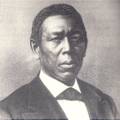
This illustrated lecture provides an overview of one of the most famous African American Families of Burlington County. Former slaves Charity and Levin Still settled in Shamong, Burlington County, and despite their many struggles raised a family of very successful and influential citizens, well ahead of their time. One of their sons, Dr. James Still, “the Black Doctor of the Pines,” became a highly successful medical practitioner administering herbal medicine to his patients while overcoming prejudice and envy by the mainstream medical profession. At the time of his death, he was one of the largest landowners in Medford. Brothers William (a leader in the Underground Railroad movement in Philadelphia) and Peter (whose story of survival is monumental) are also discussed as a part of the Still Family legacy. Mr. Laufer uses Dr. Still’s autobiography, “ Early Recollections and Life of Dr. James Still”, published in 1877, as his guide for the story of this inspirational family.
18. WILLIAM PENN AND THE QUAKER INFLUENCE IN SOUTHERN NEW JERSEY
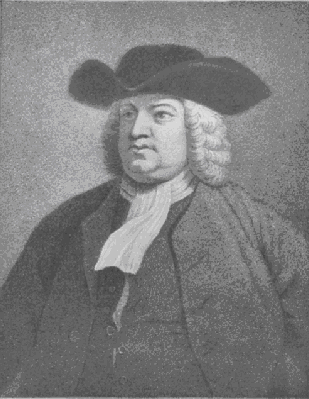
In an age when it took months to get information back and forth from Europe to the Colonies, it is hard to imagine how William Penn (1644-1718) pulled off his “Holy Experiment” as an “absentee landlord”. He only spent 2 years and 11 months of his 76 year life in the colonies. In 1682, at the age of 38, he made his first trip to America, returning to England after only 2 years. He remained in England for the next 16 years, returning briefly to America in 1699, staying for only 11 months and returning to England in November, 1701, never to return again.
Yet Penn has been called America’s first Great Champion for Liberty and Peace, the person who planted the seed of America’s nationhood, and whose writings greatly influenced the Declaration of Independence, the Bill of Rights and America’s Constitution.
While most closely associated with Pennsylvania, Penn’s first involvement in the colonies preceded his Pennsylvania connection by 6 years. In 1675, at the age of 31 he arbitrated a dispute between Quakers in West Jersey and became one of the trustees of West New Jersey. In 1677 he wrote his “Concessions and Agreements” for West Jersey, which contained provisions for the right to trial by jury, freedom from arbitrary imprisonment for debt, and an edict against capital punishment. Penn also strongly argued for religious freedom in the “Concessions”.
Burlington County Historian, Joseph Laufer, will explore the role played by William Penn in the creation of the State of New Jersey, with special influence on his and the overall Quaker influence in colonial Burlington County. It is his contention that the spirit infused by Penn and the early Quaker colonists into early Burlington County continues to this day in the quality of life enjoyed here.
19. STATUES, MONUMENTS, AND LANDMARKS OF BURLINGTON COUNTY
Burlington County contains dozens of sculptures, monuments and memorials that commemorate people and events, celebrate heroism, and identify locations of historic interest. Some are simply adornments for properties or buildings that have gained significance because of their association with the history of the county. In 2007, we identified 35 significant scultures and monuments for our annual "New Views" art project. This illustrated lecture takes you on a tour of Burlington County towns which have these unique monuments to our rich heritage. For a description and illustration of the monuments included in this lecture, CLICK HERE.
20. ELLIS PARKER (1871-1040), BURLINGTON COUNTY'S FIRST MASTER DETECTIVE
Ellis Parker was a master detective known as "America's Sherlock Holmes." In 1894 he was appointed Burlington County's first chief of detectives, maintaining an office in the Mount Holly Court House. His exploits grew to be famous throughout the country. Over a career of 44 years, beginning in 1890, Parker solved thousands of cases, unraveled 260 murder mysteries of the 236 he tackled and sent 116 killers to execution or prison using his renowned interviewing skills and forensic techniques, combining scientific deduction methods with brilliant deductive reasoning. His cases found their way into popular Detective Magazines. Today, cases solved by super-sleuth TV detectives employ techniques Parker used over 100 years ago. Mr. Laufer will regale you with Parker's triumphs and relate the surprising and tragic end to his brilliant career.
Related presentation:
21. CRIME, COURT CASES AND CHARACTERS IN MOUNT HOLLY AND BURLINGTON COUNTY
First prepared for presentation at ceremonies associated with the annual Law Day program held each May at the Mount Holly Court House, this presentation includes material from the story of Master Detective Ellis Parker (above), but has been expanded to include related court cases and crimes. It covers the story of the Murder of Lizzie Peak which has some connection to the Smithville Bicycle Railway and the Mount Holly Fair. There is also a segment on the 9 years of litigation and the court trial which determined the beneficiaries of the Last Will and Testament of H.B. Smith, contested by his Vermont-based family. Mysterious events which led to the demise of Delta Grove, the Delanco-based park along the banks of the Rancocas will be discussed. This popular recreation area is now the location of the County's Pennington Park.
22. THE JACK ALLEN MEMORIAL EARLY COUNTRY LIVING MUSEUM
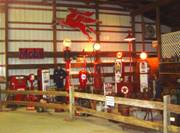
An illustrated lecture introducing the audience to the amazing collection of memorabilia collected by dairy farmer Jack Allen of Vincentown. Jack died in 2006, and his family and friends were determined to preserve his collection of items depicting a simpler life at the turn of the 20th Century in a typical New Jersey country town whose major industry was agricluture. The museum, although far from displaying all of the 6,000 artifacts in the Allen collection, is now open on the third Sunday of the month. This illustrated lecture previews and describes many of the artifacts on display or slated for future display at the museum located at 224 Landing Street, Southampton in a converted horse arena and barn just outside the village of Vincentown.
Click here for a link to the Allen Museum website
23. LITERARY BURLINGTON COUNTY
Dozens of names and institutions in the annals of Burlington County stand as testimony to the contributions of our citizenry to the fields of poetry, literature, history and journalism. This illustrated lecture will identify Burlington County writers, historic libraries and literary forums over the past three decades. People like John Woolman, Thomas Paine, Francis Hopkinson, James Fennimore Cooper and James Still head the list. Their writings inspired movements such as the abolition of slavery and the American Revolution; they chronicled the struggles of Native Americans and African Americans and life in colonial times. Lesser known journalists and writers include Richard Gilder, a noted poet, author and editor of Century Magazine; historian George DeCou; journalist Isaac Collins; and authors of children's books, Stephen Meader and Mary Biddle Fitler. The works of May and Joseph Taylor are recalled. Burlington's County's historic librarys played an important literary role in our history, among them, The Library Company of Burlington, The Beverly Free Library, The Sally Stretch Keen Memorial Library in Vincentown, and the Burlington County Lyceum of History and Natural Science in Mt. Holly. We also highlight the Rancocas Lyceum and Old St. Mary's Church, where the words and poetry of Reverend Johnathan O'Dell led to his confinement and eventual expulsion due to his Loyalist suport of King George. For a description and illustration of the sites included in this lecture, CLICK HERE.
24. BURLINGTON COUNTY, NEW JERSEY: MILITARY CONNECTIONS: MEMORIALS, BASES, AND CEMETERIES
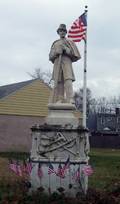
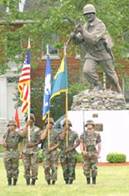
This illustrated lecture is a spin-off of a speech delivered by Joe Laufer on May 30, 2006 at Memorial Day ceremonies conducted at a local Veterans’ organization. Mr. Laufer demonstrates that despite having been established by conscientious objectors (the Quaker colonizers), Burlington County has a rich military connection. Beginning with the Revolutionary War, the lecture locates monuments commemorating military battles, including a little known monument to the unknown county militiamen who gave their lives during the battle for independence. Civil War monuments include the Soldier at Rest statue associated with the history of Beverly National Cemetery, and the Black Civil War veterans’ tombstones in cemeteries throughout the county. The Arneytown Veteran's Cemetery is highlighted, as are four highways honoring Veterans, and the county’s official multi-branch Veteran’s Memorial in Burlington Township. The “Ultimate Weapon” monument and military museum at Fort Dix, and monuments at McGuire AFB are discussed. Laufer also locates and illustrates some very unique Veterans’ Monuments erected in the 40 municipalities of Burlington County. After attending this lecture, attendees will want to visit many of the sites discussed.
Link to Text of Speech: Burlington County Remembers its War Heros
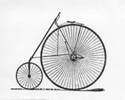
25. SMITHVILLE: THEN AND NOW - FROM PARKERS MILLS, SHREVEVILLE TO H.B. SMITH, THE SMITHVILLE EXPERIMENT AND THE STAR BICYCLE
An illustrated lecture which chronicles the history of this village on the Rancocas from pre-colonial times through several phases to its present role as the centerpiece of the Burlington County Parks System. The lecture higlights the contributions of H.B. Smith to the history of Burlington County, with particular emphasis on the H.B. Smith Industrial Village he created beginning in 1865 and expanded through the 1880s. Click here for Smithville Chronology. Descendants of H.B. Smith occupied the Smithville Mansion until 1962. It is now owned and operated by Burlington County as an historic site, museum and exhibit center.
In addition to the mansion, the county has restored several other buildings on the grounds and has designated the surrounding property as a County Park facility. Mr. Laufer is President of the H.B. Smith Industrial Village Conservancy.
SMITHVILLE CONSERVANCY WEBSITE
Spin-off Lectures:
26. HEZEKIAH B. SMITH - THE MAN: RELATIONSHIPS - POLITICS - IMPACT
This lecture focuses more on the life and personality of Hezekiah Bradley Smith -- his character, relationships, and idiosyncracies. It begins with his origins in Vermont, his early career in Lowell, Massachusetts, and eventually his arrival in Smithville, Burlington County, with his wife, Agnes Gilkerson in 1865. Inventor, politician and businessman, H.B. Smith was a complex individual whose family relationships were the fodder for exposure by journalists and his politics often controvercial. One of the more colorful individuals in the history of Burlington County, Smith is a study in 19th Century ambition and power.
27. AGNES GILKERSON SMITH: CONTROVERCIAL MATRON OF SMITHVILLE
This lecture attempts to focus directly on Agnes, H.B. Smith's wife, and her role at Smithville. It begins with her childhood in Vermont, her life as a "mill girl" in Lowell, Massachusetts, and eventually H.B. Smith's secretary, mistress and wife. We explore her medical career, her career as Editor of the New Jersey Mechanic and the influence she weilded over H.B. Smith and the development of his industrial village. Her cultural impact on life at Smithville cannot be disputed. Her early demise created a void in the life of her beloved "Hez" which was filled by a construction frenzy and the erection of a statue to her memory that ended up at the bottom of the Rancocas when Smith's will was successfully challenged by his family. This lecture will answer the many questions people have about this mysterious woman whose charm ended a marriage and helped build a village.
28. A SYMPHONY IN IRON AT SMITHVILLE - A PHOTO ESSAY
Armed with a camera and a keen eye, Mr. Laufer has created a visual essay of the decorative iron found throughout Smithville Park. H.B. Smith was both a pragmatist and a humanitarian as an employer, and when the demand for his woodworking equipment was slow, he would keep his employees working by creating structural and decorative iron products for use in his village. Today, in addition to being a garden spot for naturalists, Smithville is also a sculptural garden of iron artifacts gracing the buildings and grounds of the village. Laufer has gathered dozens of photos of the iron that graces the property and will provide another dimension to your next visit to Smithville.
29. A WALK THROUGH SMITHVILLE
An illustrated lecture based on 15 historical markers which were erected at Smithville as a part of the 4.9 million dollar Streetscape restoration project completed in 2008. The historical markers illustrate and narrate the history of Smithville and are strategically located throughout the park, serving as the basis for a self-guided tour. By including them in an illustrated lecture, Laufer is able to provide a virtual tour of Smithville Park.
30. EDITH VAUGHN - THE LAST POSTMASTER AT SMITHVILLE
For those who may be interested in a more focused topic about life at Smithville, inspired by the recent restoration of the 1840s house located at 34 Maple Avenue, Joe has created an illustrated lecture on Edith Vaughn, the last Postmaster of Smithville, who lived at 34 Maple, now the Visitor Center at Smithville. In addition to learning about Edith Vaughn and here husband, Joseph,a factory worker at Smithville, you will learn the history of the Post Office, which had been located for a time in the Smithville Company Store, and then moved to the weststern end of the Smithville Office building on the lower level. As a teenager, Edith's daughter, Mary, operated the Burlington County Library Station at Smithville in the front hallway of the Vaughn home. A story is also told of Edith having to be physically carried out of the Post Office by her husband, Joe, when the Rancoas overflowed its banks and flodded the facility and its surroundings. The story of the Vaughn Family provides special insights into family life at Smithville. Edith was Postmaster from 1930 until 1964. Her family still lives in the Mount Holly area and some members were present for the dedication of their ancestor's home which is now the new Visitor Center at Smithville.
Related Links dealing with Smithville::
The Iron Grave - Part I
The Iron Grave - Part II
Smithville Conservancy Website
The "Other" Smithville
Star Bicycle Photo
31. PASSPORT TO HISTORY IN YOUR OWN BACKYARD
Burlington County has dozens of museums and historic sites covering a variety of historical themes and events. The Burlington County Library, in an effort to promote local tourism, has created a "Passport" project -- inviting residents to learn about and enjoy local history "in their own back yard". Mr. Laufer, has created an illustrated lecture highlighting all of these special locations, providing information about their collections, themes and historic significance. The program can be enjoyed independently, but also serves as an excellent companion piece to the actual tour of the many locations listed in the Passport.
32. PEOPLE AND PLACES OF HISTORIC VINCENTOWN AND SOUTHAMPTON TOWNSHIP -
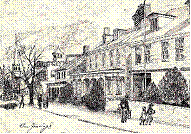
Vincentwown historically was and remains the largest village in Southampton Township. Like many Burlington County villages it owes its initial development to religion and the exploitation of waterpower for industrial purposes. The land on which it would be built was acquired by Vincent Leeds in 1743. It was not, however, until 1781 that the town's first institution appeared: the Friends Meeting House. Then followed the influence of the Burr and Irick families. By 1834, Vincentown was not only a small industrial development, but also a service center for the surrounding farming community. Vincentown today is an archetypical survivor of a West Jersey country town. Only about 15 of its some 200 buildings postdate the 1930s. Most of its houses are set close together, although a few occupy larger lots. Vincentown's 19th-century townscape gives the village both itrs charm and its historical importance. The Village is listed on both the State and National Historic Registers. Relying on oral histories, the help of town historian Dorothy Best and long-time members of the Southampton Historical Society, Mr. Laufer has created an illustrated tour of the village identifying 80 locations and their historical and architectural signficiance. Although focusing mostly on the Village of Vincentown, Mr. Laufer will briefly touch upon some of the outlying areas of the broader Southampton Township. The audience will see why this quaint community freeze-frames a period of rural Burlington County history long lost to the development and sprawl which surrounds it.
33. THE HISTORY OF THE RELIEF FIRE COMPANY OF MOUNT HOLLY
Organized as the Britannia Fire Company in 1752, Relief is the oldest continuously active volunteer fire company in the United States. Original leather buckets, lanterns and other memoriabilia, including the historic steamer shown above, are on display at the historic fire house on Pine St. near the corner of Mill St. This lecture tells about the early history of the company and illustrates the hundreds of artifacts that the company possesses and wishes to display in a museum it is planning. The company recently restored and preserved its historic minutes and charters. The lecture includes pictures of these historic documents.
41. HISTORY OF HOLY EUCHARIST CHURCH AND THE CATHOLICS OF BURLINGTON COUNTY
In October, 2007, Holy Eucharist Church in Tabernacle celebrated its 25th Anniversary. Mr. Laufer was invited to write the history of this unique Pinelands Catholic Church. In addition to writing the history, he created an illustrated history of the Catholic presence in Burlington County for the past 162 years. Tracing the development of the parish from St. Paul's Church in Burlington, through Sacred Heart in Mount Holly, then St. Mary's in Medford, Laufer brings us to the creation of Holy Eucharist Parish in 1982 in a farm field in the center of Protestant Tabernacle, New Jersey. The creation of a modern Post-Vatican II Church which blended in with the rural character of the region is described and illustrated. The process which involved parishioners in the design of the church and the selection of the unique stained glass windows and other church adornments are described as only an "insider" who participated in the process could do. Not only a story of this relatively new parish, it delves into the history of the Catholics of New Jersey, of the Diocese of Trenton and of Burlington County. CLICK HERE FOR ANNIVERSARY BOOKLET WHICH CONTAINS COMPLETE PARISH HISTORY.
35. A BRIDGE TO OUR PAST: A SHORT HISTORY OF BURLINGTON COUNTY
Originally created for the Tercentenary of Burlington County (1694-1994), this illustrated lecture focuses on the role played by Burlington County at different times in the evolving history of the Republic. Mr. Laufer makes a case for the fact that the seeds of American Liberty which grew into the American Constitution were first sewn in Burlington County through William Penn's "Concessions and Agreements" and other actions taken by early Quaker Settlers. Also, the seeds for the liberation of slaves were planted in Burlington County long before the Civil War by patriots like John Woolman of Mount Holly. As a natural crossroads between Philadelphia and New York, by water, by rail and by highway, many pivotal events of the Revolutionary war took place in Burlington County. In the history of farming and industry, Burlington County also played a major role, with its model industrial towns, such as Smithville and Roebling, and its cranberry and blueberry industry, housed at Whitesbog and surrounding areas. This stimulating lecture will provide new insights into the roots of American Liberty planted so firmly in the soil of Burlington County, New Jersey.
Related Link: History of Burlington County
36. BROTHERTON - A SHAMONG LANDMARK
Based on material from the book, BROTHERTON, by local historian, George Flemming, Joe focuses on the early Native American villages of Burlington County, but primarily on the Indian Reservation of Brotherton ( ) located in present-day Shamong Township in the section of the township bettr known as Indian Mills. The lecture features a recently created map by xxxxxxx which pinpoints the exact location of Brotherton as it relates to present day landmarks and roads. How Brotherton came to be established and a description of life there is discussed, along with the events that led to its demise and the departure of the Indians to New York.
37. EVESHAM TOWNSHIP / MARLTON:: GATEWAY TO BURLINGTON COUNTY HISTORY
Prepared originally for the Evesham Historical Society, this illustrated lecture serves as an interesting overview of the evolution of one of Burlington Counties premiere communities. Evesham is a prototype of Burlington County’s earliest Quaker communities which for most of history was a typical farm community with several outlying villages and a central “main” village (Marlton). Its metamorphosis came after World War II, and during a 20-year growth spurt it transformed into one of the most populated communities in the county.
Laufer describes Evesham’s Quaker roots in the late1660s, its position as one of the original 8 county Constabularies beginning in 1688, and its division and incorporation in 1692. He describes the extenstive farms of the 13 land-holding pioneers: The Bartons, Roberts’, Lippincotts, Hewlings, Troths, Sharps, Inskipps, Burroughs, Haines’, Eves, Wills’, Evans’ and Venables, and brings the vestiges of their families into the 21 st century by capturing in photographs their historic farmhouses which remain preserved in varying degrees to this day – illustrating how their surrounding farms have become suburban housing developments with their individual “personalities and characteristics” today. Evesham played a role in Burlington County’s Revolutionary War heritage, as the British retreat from Philadelphia brought them through this community on June 18 th and 19 th, 1778, and a hundred years later, its abolitionist initiatives made it a pivotal community on the Underground Railroad.
A special segment on the Village of Marlton with then and now pictures of classic colonial and Victorian homes provides an insight into how a community changes yet remains the same, and how preservationists can impact a community by helping it move forward without losing its character. With the assistance of local web historian John S. Flack, Jr., Laufer provides a chronology and description of the various neighborhoods from 1954 through 1984, including, but not limited to, Marlton Hills, Georgetown, Heritage Village, Arrowhead, Woodstream, Brush Hollow, King’s Grant, and Greentree Village.
Although a lecture about only one of Burlington County’s 40 municipalities, it can be appreciated by other communities as a prototype of a community which went through radical changes in topography, population, industry and transit while maintaining elements of its common past with neighboring communities possessing similar Quaker roots.
|